
Chasing Resistance
A Drug Development Story

This story was first published by the American Council on Science and Health - https://www.acsh.org/news/2026/05/12/chasing-resistance-drug-development-story-50093
Around the turn of the century (this century), I was working at Wyeth (now part of Pfizer) as head of anti-infectives, focused on a problem that has only grown worse since then: antimicrobial resistance. I was and remain passionate about finding solutions to antimicrobial resistance. But back then the problems were not quite as complicated as they are today.
Wyeth marketed one of the best-selling antibiotics in history, piperacillin-tazobactam. It is a combination of a penicillin drug (piperacillin) with an inhibitor (tazobactam) of the major mechanism by which bacteria become resistant to drugs in the penicillin family, a class of enzymes called beta-lactamases. The inhibitor protects the penicillin from destruction by these enzymes. As always, bacterial pathogens had their ways of becoming resistant to this combination. They developed enzymes that were unaffected by tazobactam. We at Wyeth wanted to be able to market a successor to piperacillin-tazobactam that would be effective against bacteria carrying tazobactam-resistant enzymes.
The story started with the review of the scientific literature and patents. We discovered a compound that had been synthesized by GlaxoSmithKline (GSK) that would fit the bill. It had problems as a drug that we thought we might be able to fix. So our first step was to speak with GSK to see if they would sell us the rights to their drug. With these rights, we could then work to improve their compound without having to be concerned about what they had patented. This would have made our task much more straightforward. Alas, they were dismissive of our idea. First, of course, we were their competitors in the industry. Second, they didn’t think we would be able to improve on their chemistry (let’s call this arrogance).
Not being one to take no for an answer, I huddled with our chemists. That was our first roadblock. Our chemists were just not familiar with these kinds of modified penicillin structures called penems.
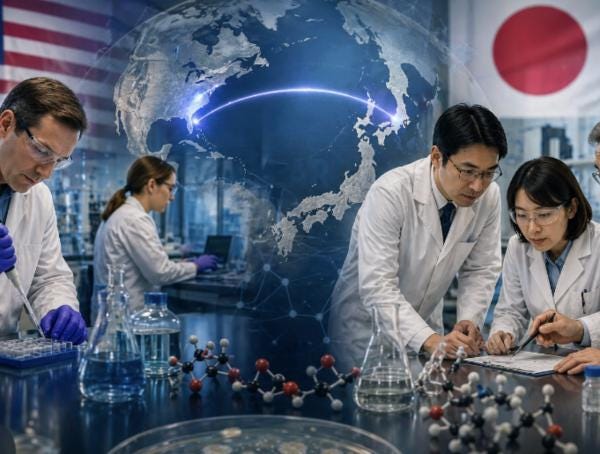
At that time, Wyeth had an affiliate in Japan, Wyeth-Lederle Japan. I visited them about twice a year. From these visits I knew that their chemists had extensive knowledge and experience with penem chemistry. I suggested that we ask them to develop a plan to explore the chemistry needed to start this project.
Next roadblock. Wyeth was planning to close the affiliate in Japan, and all those chemists would lose their jobs. I proposed to senior management that we keep these chemists (ten of them) employed for one year. That would be enough time for us to know whether the project had a chance of succeeding. To my surprise, they agreed.
The chemists at Wyeth in Pearl River, New York (where I was based) and our Japanese colleagues worked furiously to develop a plan of attack to improve on key properties of GSK’s compound without infringing on its patents. We synthesized a large number of compounds for testing within the first few months of work. In Pearl River, our scientists tested them against key enzymes that were resistant to tazobactam.
Those that worked were combined with various penicillin-like antibiotics and tested against bacterial pathogens harboring these enzymes. Within less than a year, we had a number of very active compounds in vitro. In other words, they worked on enzymes and bacteria in test tubes.
Would these compounds work against infections in living systems? To answer this, we began testing using mouse models. These models are a good predictor of antibiotic activity in humans and also provide an initial look at safety. These tests showed that we had four or five compounds that had all the properties we were looking for.
The next step was to convince Wyeth management that we should invest additional funding to scale up synthesis of our two best performing compounds (one would be a back-up just in case) and to proceed with formal safety testing that would allow us to begin clinical trials in human subjects. We reached this step in less than one year – a formidable accomplishment that would not have been possible without our Japanese colleagues. Wyeth management understood the potential of this series of compounds to provide a follow-on to their highly successful piperacillin-tazobactam franchise and quickly agreed to additional funding.
Producing drugs or the chemical intermediates required to make them in large quantities involves more than just replicating the methods used in early research. It almost always requires developing new chemical processes, another specialty area of medicinal chemistry. Once again, we relied heavily on the expertise of our Japanese chemistry colleagues, who quickly showed they were up to the task. By our one-year goal line, we had enough of each of our two top compounds required for safety testing in animals. Success with thewe animal studies would allow us to proceed to human clinical trials.
As is true of most research projects in the pharmaceutical industry, we ran into a scientific roadblock and were unable to proceed further. In safety studies, our lead compound showed evidence of kidney toxicity, and our backup compound was no better. At that point I was no longer convinced that further efforts by the chemists would be likely to succeed, and management agreed.
After the project was discontinued, most of our Japanese chemist colleagues lost their positions, and after another year or so Wyeth Lederle Japan closed its doors. Wyeth in the US abandoned anti-infectives research altogether. The company was later purchased by Pfizer.
For me, this was a bittersweet experience. I remain in awe of the scientific talent of industry researchers. Industry research requires a different approach in many ways than academic research. But the scientists who carry out this work are in no way inferior to their academic counterparts. I will never forget our Japanese colleagues, some of whom did not even speak English. Looking back on this story, I realize more than ever that the language of science is global and that some of the world’s greatest scientists are not Americans.
Another interesting piece on antibiotic drug development from a veteran in the field, thanks for sharing, David!